Plan your open deck projects in minutes
Upload the project spreadsheet exactly as you received it. The planner turns it into standardized pieces, feasible trucks, and a priced plan your team can review, adjust, and quote.
Upload the spreadsheet as you received it
Mixed metric and imperial units, inconsistent columns, and shorthand notes are all fine. Upload the file or paste the load data as is. No reformatting and no retyping before the planning can start.
Every piece parsed, standardized, and checked
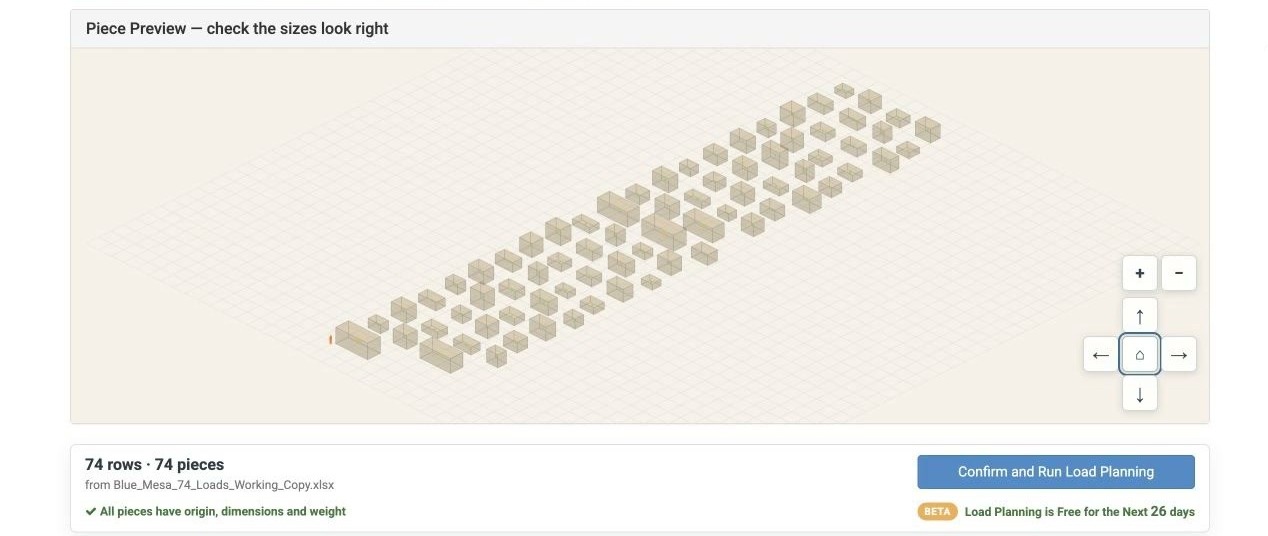
The planner turns the rows into a standardized piece list and renders every piece so you can check the sizes look right. Bad data gets caught here, before it becomes a bad quote.
The planner builds the trucks
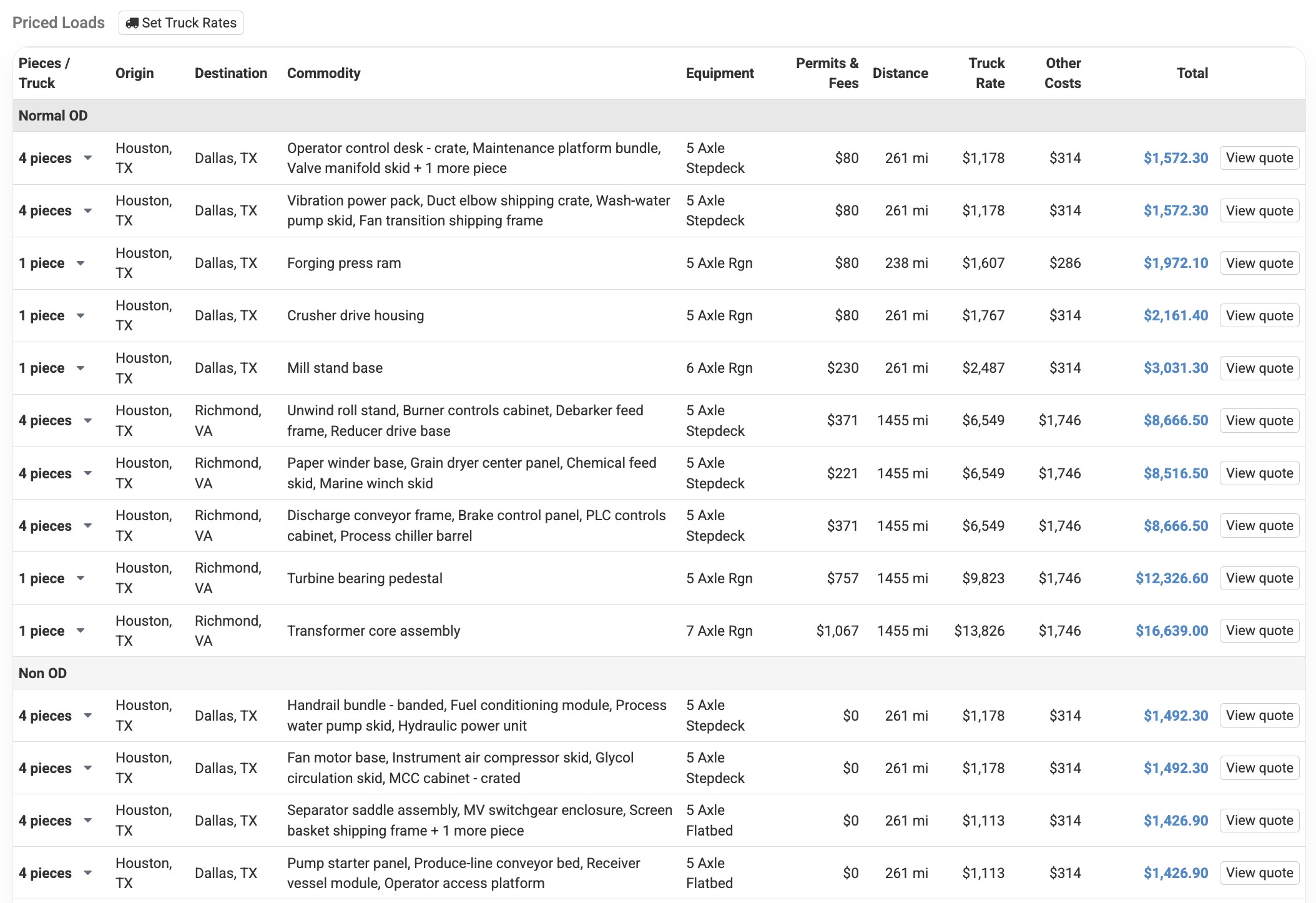
74 pieces become 24 planned trucks. The planner groups compatible pieces and picks the equipment for each load. Flatbeds for routine freight, step decks where height matters, RGNs where dimensions, deck height, or axle limits demand them.
Your planner reviews and decides
This is not a black box truck count. Inspect every proposed load, review the pieces and constraints behind it, move cargo between trailers, change equipment, or split a load. The software proposes and your planner decides.
The whole fleet priced
Every truck leaves with permits, escorts, and accessorials priced for each state on its route. Add your truck rates and the project total is ready to send. 74 pieces priced in under 2 minutes.
Respond first. Quote sharper. Take on more.
Be the first quote back. Every time.
An RFQ lands on several desks at once, and the freight usually goes to the first solid quote. Win that race once and you win a job. Win it every time and you become the one your customer calls first.
Same project, same price, no matter who quotes it.
Ask five people to quote one project and you will get seven different numbers. Every operation knows that problem. The planner works from one set of rules, so the quote comes out accurate and repeatable no matter who builds it. Every truck it plans out of the job becomes margin you keep or price you can use to win.
Find the bombs before you price them.
Every load list can hide one. A piece that needs an RGN and a police escort, or a height that needs a route survey. The planner flags those pieces for your experienced people to review up front, before they wreck the quote or the whole project.
Quote far more work with the same team.
Planning stops depending on one overloaded expert. When each quote takes minutes instead of hours, the same team answers many times more RFQs and gets to bid on the projects it wants, not just the ones it had time for.
